









Send Us A Message
How Tyre Building Macine Flexibility Impacts Small-Batch Tire Production
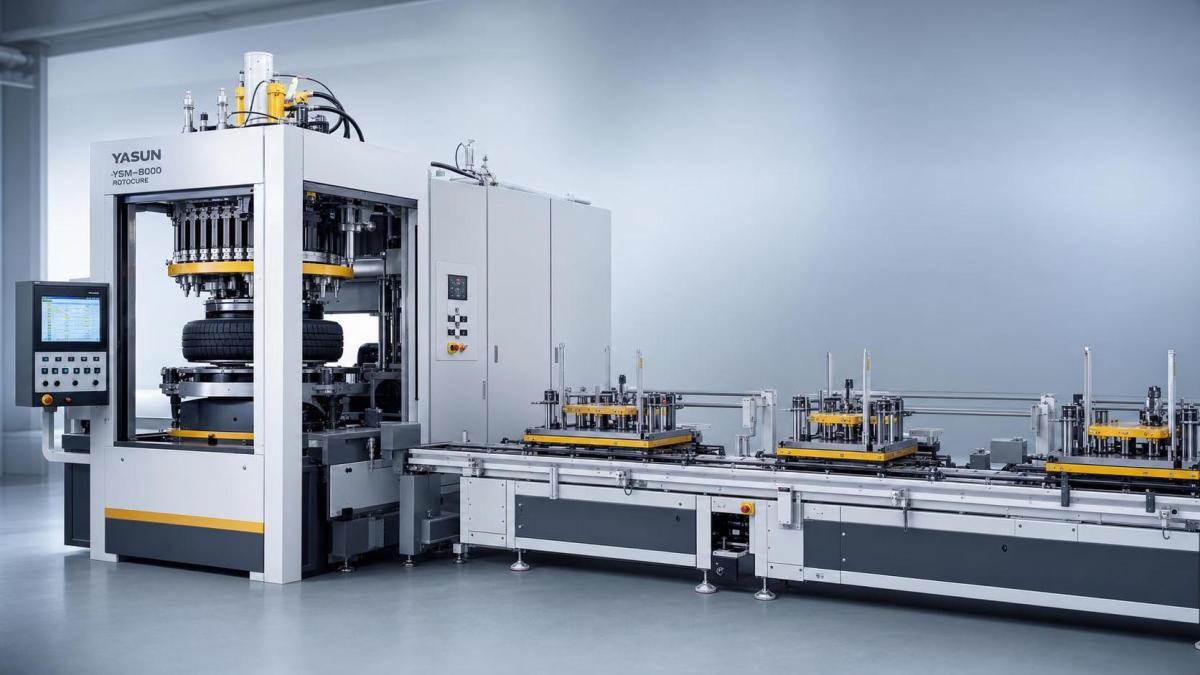
When your customer runs small batches, flexibility in a Tyre Building Macine stops being a nice feature and becomes the difference between a profitable line and a machine that spends too much time waiting for the next setup. Dealers and agents usually get pulled into the conversation when a tire plant is trying to shorten changeovers, add more SKUs, or take on trial orders without destroying daily output. That is where the real evaluation starts: not with brochure language, but with what the machine can switch, hold, and repeat under production pressure.
In small-batch tire production, the pain point is rarely pure speed. It is the accumulated loss from recipe changes, bead and carcass variation, operator adjustment, and quality drift after each switchover. If you are selecting equipment for a customer, this is the checklist that usually tells you whether the machine will work in the field or become a constant source of complaints.
Start with the changeover window, not the rated output
A machine can look efficient on paper and still fail in a small-batch environment if every tire size change ties up the line. Ask what must be changed manually between specifications: drums, guides, tension settings, splice positions, material feed paths, control parameters, and inspection points. The fewer mechanical interventions required, the better the machine usually performs when order sizes are short.
- Check whether size changes rely on stored recipes in the PLC or depend on operator memory.
- Ask which settings are tool-free and which need mechanical teardown.
- Find out how long it takes to move from one specification to another under normal operating conditions, not ideal demo conditions.
A common mistake is to accept “fast changeover” without separating control-side adjustment from physical replacement time. In small batches, physical handling time is often what hurts.
Check the real tire mix the customer intends to run
Flexibility only matters within the range the customer actually sells. A Tyre Building Macine may be perfectly suitable for a narrow band of passenger tire sizes but inefficient once the customer adds specialty patterns, export SKUs, or frequent pilot runs. Build the discussion around the actual product mix: size range, construction differences, compound variation, and expected batch frequency.
If the plant mainly alternates between similar sizes, moderate flexibility may be enough. If it handles many short orders with different constructions, you need a machine that keeps stability even when the setup changes several times per shift.
Look at repeatability after each switch
This is where many small-batch projects quietly lose money. The machine may switch quickly, but the first several tires after changeover may need extra inspection, rework, or outright scrap. For a dealer, that means the customer blames the machine even if the nominal output target is met.
What you want to know is simple: after a change, how fast does the machine return to consistent build quality? Ask the customer to review internal checks around component positioning, splice consistency, layer alignment, and dimensional repeatability. If the machine needs heavy operator correction to stabilize the first batch, it is not truly flexible.
Measure operator dependency honestly
Some machines are sold as flexible when the flexibility is actually coming from a very experienced operator team. That can work in one factory and fail completely in another. For distributors and agents, this is a risk point because the installed result depends on labor skill more than equipment capability.
Check these points during evaluation:
- How many manual corrections are normal during a size change?
- Can a trained but non-expert crew run the machine across multiple SKUs?
- Are setup instructions built into the control system, or passed down verbally on the shop floor?
If the process depends too heavily on one senior operator, the machine may look productive during acceptance but become unstable later.
Do not separate machine flexibility from upstream and downstream handling
Small-batch performance is not decided by the building machine alone. Material feeding, staging, component inspection, and post-build handling all affect whether quick changeovers actually save time. If the line still needs slow manual intervention after the tire is built, the value of a flexible machine gets diluted.
This is why experienced buyers look at automation logic across the whole cell. The same thinking shows up in adjacent equipment too. In conveyor belt manufacturing, for example, a system such as Cured belt inspection and repair line is valued not just for repair capability, but for how PLC controls, hydraulic pressure application, and stable process settings reduce variation between jobs. The principle is the same: flexibility only pays when it remains controlled, repeatable, and easy to recover between product changes.
Check whether the control system supports low-volume production logic
A customer making long, repetitive runs can live with a more basic control structure. A customer making short batches usually cannot. The control layer should make recipe management clean, traceable, and quick to call up. It should also reduce the chance of loading the wrong settings during a busy shift.
Ask how the machine behaves when orders are irregular
This is especially relevant for dealers serving export-oriented plants or regional manufacturers that handle mixed demand. Some weeks the customer may repeat a familiar size; other weeks they may jump across multiple low-volume specifications. A flexible Tyre Building Macine should recover smoothly from that irregularity without needing extensive recalibration each time.
The practical test is whether maintenance and setup burden rises sharply once product sequencing becomes messy. If it does, the machine may still be suitable for medium runs, but it is a weaker fit for true small-batch work.
Include serviceability in the flexibility discussion
A flexible machine that is hard to maintain will eventually lose that flexibility. Wear parts, access points, calibration routines, and troubleshooting time all matter more when the line switches often. Frequent changeovers expose weak points faster.
This is where supplier capability matters. A manufacturer with established engineering, installation, commissioning, and after-sales support can usually help the customer keep setup accuracy and uptime where they need to be. For distributors, that support structure is not a side issue; it affects whether the machine keeps performing after handover, especially when customers are balancing budget, SKU variety, and labor constraints.
Use a short decision sequence before you quote
Before recommending a machine, work through the decision in this order. Confirm the customer’s actual tire mix. Map every required changeover step. Check how fast the machine returns to stable quality after a switch. Review operator dependency and recipe control. Then look at service access and support coverage.
If those five points are clear, you can judge whether flexibility will genuinely improve small-batch production or simply move the bottleneck somewhere else. That is the real standard. In this kind of project, the best machine is not the one with the highest headline capacity. It is the one that lets the customer change products often, lose less time, and keep quality predictable from the first batch to the next.