









Send Us A Message
How much cutting force does a rubber bale cutter actually need?
A rubber bale cutter needs enough usable blade force to complete the toughest approved cut at the required speed, with a documented reserve for material variation and blade wear. There is no reliable universal tonnage based on bale weight alone. Rubber formulation, temperature, cutting width, blade geometry, and machine condition can change the force requirement substantially.
The practical problem often appears when a machine cuts warm, narrow samples successfully but stalls on full-width bales from cold storage. Undersizing creates incomplete cuts and production delays; buying a larger machine without checking the cause can add cost without improving output. Start with representative cutting trials, then verify that the hydraulic system can deliver the measured force throughout the working stroke.
Define the cut before comparing tonnage
A quotation stating only “rubber bale cutting” leaves too much uncertainty. Establish the operating envelope that the supplier must demonstrate:
- Material: rubber grades, compounded or uncompounded condition, and any packaging left on during cutting.
- Bale geometry: maximum width under the blade, height, orientation, and required section size.
- Temperature: expected core temperature at cutting, including material arriving from storage.
- Production requirement: complete cutting cycle, loading method, cuts per bale, and allowable interruptions.
- Acceptance condition: full separation, acceptable deformation, and no unapproved manual finishing.
Width and height affect the cut differently. Width influences how much blade edge engages the rubber, while height affects penetration distance and blade-side contact. An inclined blade engages material progressively, so its peak demand may differ from that of a straight blade contacting the full width simultaneously. Bale mass does not describe these interactions.
Do not substitute Shore hardness, tensile strength, or a generic rubber shear-strength value for a cutting trial. These properties may help distinguish materials, but a blade creates a combination of deformation, fracture, and friction that simple bulk-property calculations do not capture reliably.
Hydraulic pressure is not cutting force
A high pressure rating does not, by itself, prove that a cutter has high blade force. Cylinder area matters, as do the mechanical arrangement and losses between the cylinder and cutting edge.
For a direct-acting cylinder cutting on its extension stroke:
Theoretical cylinder force (kN) = pressure (MPa) × piston area (mm²) ÷ 1,000.
As an illustrative calculation—not a recommended machine specification—a 100 mm bore cylinder operating at 20 MPa produces approximately 157 kN of theoretical extension force, or about 16 metric tonnes-force. Actual usable blade force is lower after relevant losses. If cutting occurs on retraction, use the annular piston area after subtracting the rod area. Linkages require a position-dependent mechanical calculation.
Ask whether the quoted tonnage means theoretical cylinder output, nominal machine capacity, or verified force at the blade. Also confirm whether “tons” means metric tonnes-force or US short tons-force. A pressure gauge alone cannot resolve these ambiguities.
Hydraulic power introduces another limit: approximately, power equals force multiplied by speed. A machine may reach its rated force only after slowing down. Compare available force at the required cutting speed, rather than accepting separate maximum-force and maximum-speed figures that cannot occur together.
What changes the force requirement on the shop floor?
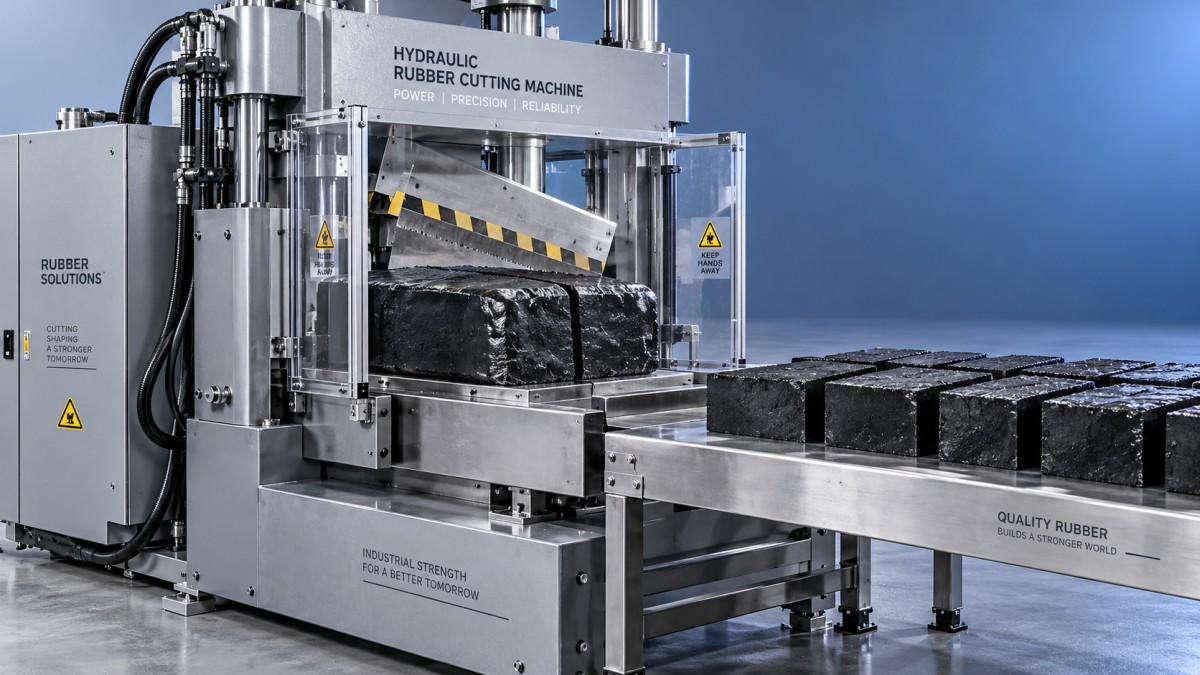
A stall is therefore not automatic proof that the nominal tonnage is too low. A damaged blade, binding guides, restricted flow, or incorrect pressure setting can produce similar symptoms. Never compensate by increasing the relief setting beyond the machine’s approved limits; the cylinder, frame, hoses, and tooling must remain within their ratings.
Use cutting trials to establish the required reserve
The most useful trial is not a single successful cut. It is a documented demonstration across the agreed operating envelope, including the conditions most likely to increase resistance.
- Select representative material. Include demanding grades and maximum bale dimensions. Record material identity, packaging, orientation, and temperature rather than relying on appearance.
- Establish machine condition. Document the blade, guides, hydraulic settings, and oil condition. A freshly sharpened blade alone does not establish performance near the maintenance limit.
- Measure the loaded stroke. Record pressure against blade position or time, together with cutting speed. Where cylinder pressure is used to estimate force, account for effective area, opposing pressure, losses, and machine geometry.
- Repeat at production cadence. Include loading, cutting, return, and unloading. Continue sufficiently to assess repeatability and behavior as the hydraulic system reaches normal operating temperature.
- Review unsuccessful cuts. Distinguish insufficient force from inadequate stroke, material movement, blade binding, or control interruptions before selecting a larger machine.
The reserve should cover demonstrated variability, measurement uncertainty, and agreed blade wear—not an arbitrary percentage copied between applications. Ask the supplier to justify the proposed margin and state the conditions under which the machine must still complete the cut.
Instrumented testing and adjustments must be performed by competent personnel with guarding and interlocks functioning. A stalled blade can leave stored hydraulic energy and compressed material; clearing it requires the manufacturer’s isolation and recovery procedure, not access beneath the blade.
When a higher rating is worth paying for
A higher-capacity machine is justified when validated demand approaches the smaller machine’s usable limit, when approved colder or wider bales exceed it, or when higher force is needed without sacrificing cutting speed. It may also be appropriate for a clearly defined future material range, provided the blade opening, stroke, and handling arrangement accommodate that range.
More tonnage offers little benefit when loading dominates the cycle or when poor blade condition causes the excessive resistance. A larger cylinder also requires more flow to maintain the same speed. Energy consumption depends on the hydraulic architecture and duty cycle, so do not assume that tonnage alone determines running cost.
Apply the same evidence standard to refurbished equipment
For a refurbished cutter, request evidence of cylinder and seal condition, guide alignment, frame integrity, blade suitability, safety-function testing, and repeated loaded performance. An original nameplate establishes a design rating, not the present machine’s ability to sustain it. A no-load demonstration cannot verify cutting capacity.
Keep specifications from other rubber-processing equipment separate. The used_second hand Steel cord conveyor belt curing press line includes PLC control, hydraulic systems, and a hydraulic belt cutting device, but these features do not establish suitability or cutting force for rubber bales. Its curing and belt-processing parameters should not be used to size a standalone cutter.
For the purchase specification, require complete cuts on identified materials at stated dimensions and temperatures, within an agreed total cycle time and approved pressure limits. Attach trial records, blade-condition limits, and the reserve justification. This makes the decision about verified production capability rather than whichever quotation displays the largest tonnage.