










Send Us A Message
Tyre Building Macine Maintenance Checks That Reduce Bead Placement Errors
Tyre Building Macine Maintenance Checks That Reduce Bead Placement Errors
For after-sales maintenance teams, consistent Tyre Building Macine performance starts with disciplined inspection routines. Small issues in alignment, pressure control, or component wear can quickly lead to bead placement errors, higher scrap rates, and customer complaints. This guide outlines the essential maintenance checks that help stabilize production, reduce unplanned downtime, and keep tyre building quality at the expected standard.
Bead placement errors rarely begin at the bead itself. On a running tyre building line, the first visible defect may be an offset bead seat, a wrinkle near the turn-up, or inconsistent apex position, but the root cause is often upstream in machine condition. A drum that no longer expands evenly, a servo axis with small repeatability loss, or a pressure circuit that drifts during a long shift can all move the bead from where the operator thinks it is being placed. That is why effective maintenance is less about reacting to bad tyres and more about catching machine drift before quality starts to slide.
The most critical checks are those tied to centering and repeatability. On many machines, bead placement complaints increase after format changes, bladder replacement, or maintenance shutdowns. These are the moments when technicians should verify drum centerline, chuck symmetry, and bead setter travel against the machine’s reference condition. If the left and right bead application points are not returning to the same positional logic after changeover, the line may still run, but uniformity problems tend to show up later in curing or final inspection. The cost of missing that check is usually much higher than the time spent confirming it.
Where maintenance teams usually find the real problem
Air pressure stability is one of the most underestimated factors. In theory, the bead applicator and auxiliary cylinders work within an acceptable pressure band. On the shop floor, the issue is often fluctuation rather than absolute low pressure. A pressure drop during peak air consumption may not stop the cycle, but it can soften clamping force or slow actuator response just enough to create inconsistent bead landing. This is more common in older workshops, lines sharing utility supply, or systems with moisture contamination. A routine check of regulators, drains, hoses, and valve response is more useful than only looking at the gauge at shift start.
Mechanical wear creates a different pattern. When linear guides, bearings, or bead ring handling components begin to loosen, the defect is often intermittent. Operators may report that one batch runs well and the next does not, even under the same recipe. That kind of complaint usually deserves a backlash and play inspection rather than another process adjustment. If maintenance relies only on visual checks, these early-stage losses in rigidity can be missed. A machine can still appear healthy while its placement repeatability is already outside the tolerance needed for stable tyre building.
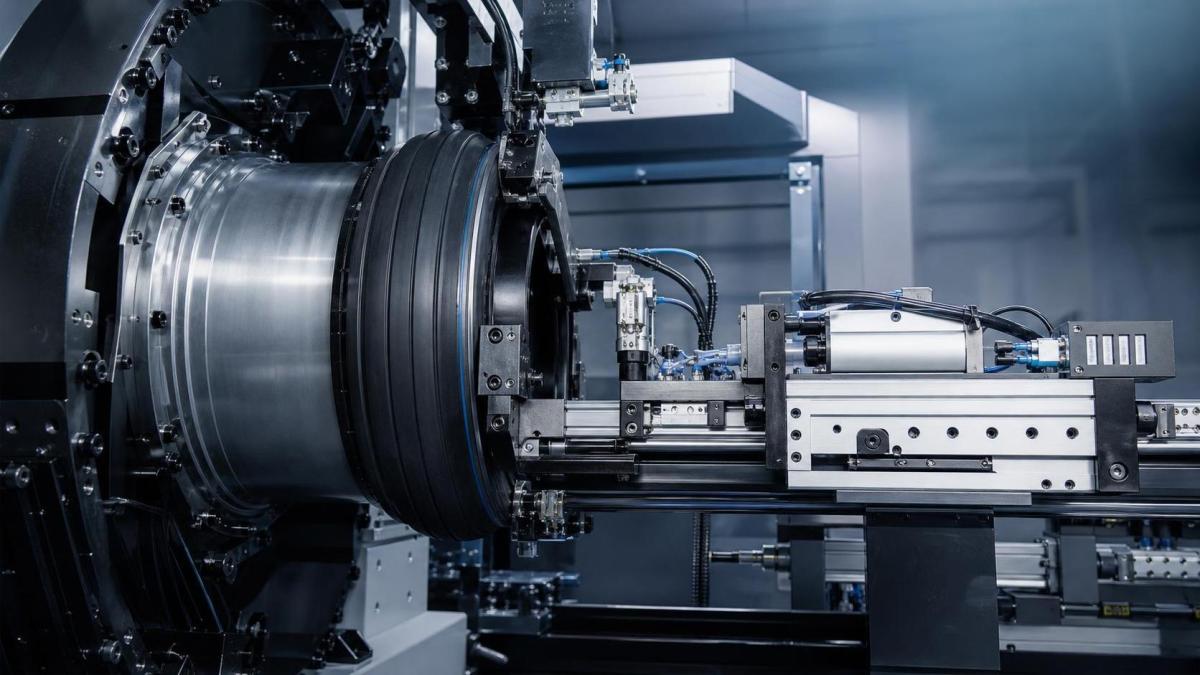
Temperature also changes behavior more than people expect. In some plants, the first hour after startup produces different results from the middle of the shift because friction, lubrication condition, and control response are not yet fully stable. This is especially relevant when production resumes after a long stop or seasonal ambient conditions change. If bead errors are concentrated at startup, the answer may not be operator skill; it may be a warm-up verification routine that is missing from the maintenance standard.
Checks that matter more after a line has aged
On newer equipment, maintenance work is often focused on cleanliness, calibration confirmation, and sensor health. On older or refurbished lines, the emphasis shifts. The question becomes whether the machine still holds geometry under load, not simply whether it reaches the programmed position at idle. JC INDUSTRY has long worked across new equipment, installation, commissioning, and refurbishment, so this distinction matters in practice. A rebuilt line can run very reliably, but only if the inspection routine reflects the real wear profile of the machine rather than treating it like a factory-fresh asset.
That same logic appears in adjacent rubber processing equipment. For example, when evaluating reused process assets such as the used_second hand Devulcanizer chamber, experienced teams do not stop at nameplate data. They check pressure integrity, drive stability, automatic loading and unloading response, and how the vessel behaves over time under thermal and mechanical stress. The principle is similar on a Tyre Building Macine: actual production consistency depends on how well the machine maintains condition during repeated cycles, not on whether it can complete one correct cycle during inspection.
Electrical and control checks should be equally practical. Sensor contamination, cable fatigue near moving axes, and encoder feedback noise can all create placement variation that looks mechanical at first. A maintenance team that only swaps parts after alarms appear will usually be late. It is better to trend small deviations in home return, axis following behavior, and cycle timing. If the bead placement station is reaching target more slowly than usual, or if one side consistently needs minor operator correction, that is already a maintenance signal.
What should be checked by interval, not by complaint
A useful inspection routine is not long; it is disciplined. Daily checks should focus on contamination, air treatment condition, abnormal noise, and confirmation that bead handling parts move cleanly without hesitation. Weekly checks should go further into alignment references, fastener security in high-vibration points, lubrication effectiveness, and cylinder or servo consistency over repeated cycles. Monthly or shutdown checks are the right time for play measurement, calibration verification, component wear review, and control cabinet inspections.
One more point is worth keeping in mind: not every bead defect is a machine defect. Material variation, bead component handling, and operator loading habits can still influence results. But when the same issue appears across shifts or returns after process correction, maintenance should assume the machine condition needs verification. Teams that separate process troubleshooting from equipment inspection too strictly often lose time. On tyre building lines, the two interact constantly.
A practical standard for maintenance is simple: if a check cannot explain why repeatability is being protected, it probably does not belong at the center of the routine. The best Tyre Building Macine inspection programs are built around failure patterns seen in production, especially after changeovers, long runs, and restarts. That is where bead placement errors usually begin, and where disciplined maintenance prevents them from becoming a scrap trend.