









Send Us A Message
How knife wear changes the operating cost of a tire shredder
Knife wear raises a tire shredder’s operating cost well before the knives need replacing. As cutting edges round off and clearances change, the machine may process fewer tons, use more electricity per ton, and spend more time reversing or stopped for maintenance. A lower purchase price can quickly lose its advantage if these effects are missing from the cost estimate.
The useful comparison is cost per ton of material meeting the required output specification. Blade price matters, but so do usable knife life, changeover time, output consistency, and the condition of the components holding the knives in position.
How worn knives turn into higher costs
A sharp, correctly adjusted cutting assembly concentrates force at the cutting edge. As that edge deteriorates, rubber may deform or slip before being cut. Depending on the shredder design and feed material, this can increase cutting resistance, reduce effective bite, or trigger more overload reversals.
Electricity consumption must therefore be measured against production. A machine can draw similar power while processing fewer tons, making each ton more expensive even when hourly electricity use appears stable. Motor current is useful for spotting changes, but it cannot establish energy efficiency on its own.
The same loss of throughput spreads labor and other time-based expenses over less output. Operators, conveyors, extraction equipment, and downstream machinery may remain available throughout the shift while the shredder produces less usable material.
Output quality can also change. Depending on the cutting and screening arrangement, worn edges or excessive clearance may leave more connected pieces or oversize material. If these require another pass, the extra handling and processing belong in the cost calculation. Where no recirculation system exists, inconsistent output may instead restrict downstream equipment.
Build the estimate around a complete knife service cycle
A demonstration with fresh knives shows the machine’s starting capability. It does not establish its average operating cost. For a useful estimate, examine production from installation or servicing of the knives through to the next required intervention.
Operating cost per acceptable ton = total operating expenses over the period ÷ tons meeting the agreed specification during that period.
Include electricity, operating labor, knives, regrinding or approved rebuilding, maintenance labor, and associated consumables. Use scheduled production hours and realistic availability when forecasting output, so maintenance stops reduce the denominator appropriately.
Keep operating expense and lost commercial opportunity distinct. If downtime reduces forecast tonnage, the cost-per-ton calculation already reflects that loss of productivity. Any additional estimate of lost contribution should be shown separately, with an explanation of whether production can be recovered later.
Knife life depends on what enters the shredder
A knife-life claim has little purchasing value without a feed description. Passenger tires, truck tires, and larger specialty tires differ in construction, reinforcement, and handling requirements. Bead removal, pre-cutting, and the required discharge size can also change the cutting duty.
Embedded steel is part of normal tire processing, but dirt, stones, and unrelated metal introduce different wear and impact risks. A machine handling relatively clean, consistent tires should not be compared directly with one receiving mixed outdoor stock.
Ask suppliers to relate their estimates to the intended feed mix, preparation method, contamination level, and output requirement. Hours between knife changes are less informative than tons processed under defined conditions. Even a tonnage figure needs context if one machine produces coarse primary shreds and another must deliver smaller pieces.
Hardness alone is also an incomplete selection criterion. Knife material and heat treatment must balance wear resistance with resistance to chipping under the expected loads. Repeated edge damage may require changes to feed control, knife specification, or machine condition rather than simply selecting a harder replacement.
Separate normal wear from cutting-assembly problems
Rounded edges are only one reason cutting performance deteriorates. Incorrect clearance, loose fasteners, worn spacers, damaged knife seats, or shaft movement can affect how the cutters engage. Installing new knives without correcting these conditions can leave the original operating problem unresolved.
During inspection, compare edge rounding, chips, cracks, and wear patterns across the cutting assembly. Localized damage or uneven wear deserves investigation, particularly if it returns after replacement. Where the design includes counter-knives or bed knives, inspect those components as well.
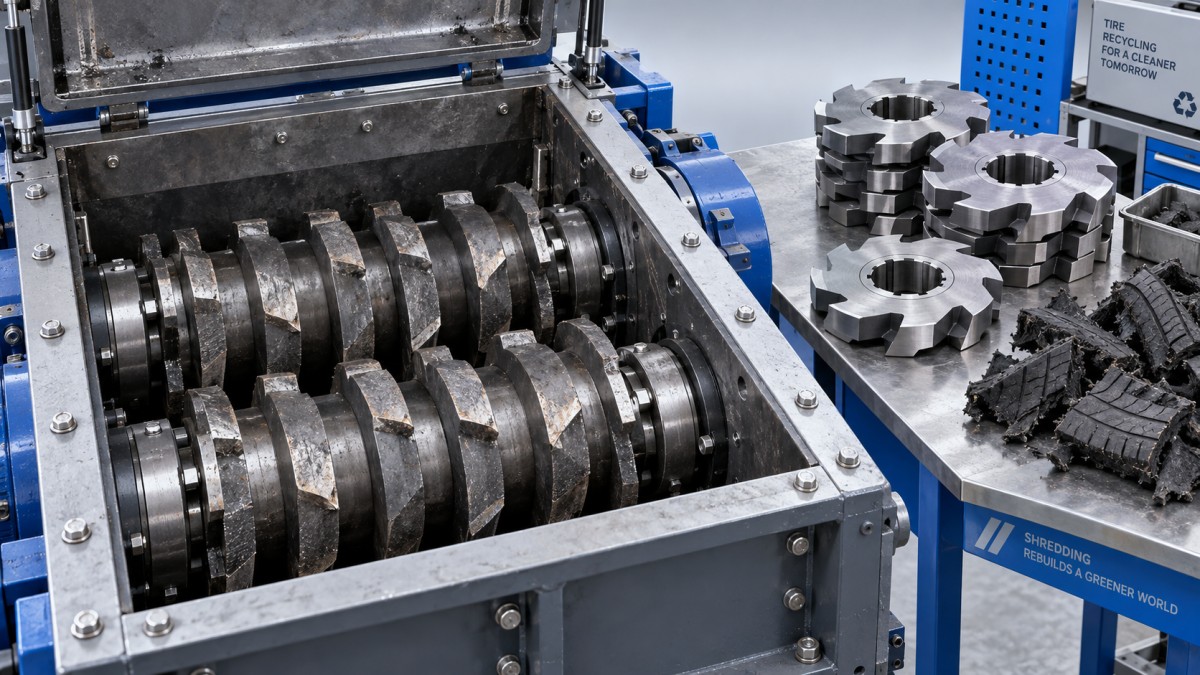
For refurbished equipment, examine the knife mounting system alongside the visible cutting edges. Fresh knives can make a machine look ready for production while worn seats or bearing play prevent stable adjustment under load. Request refurbishment records showing what was measured, repaired, and replaced, including relevant drive and overload-protection work.
Serviceability can outweigh a lower knife price
A replacement quotation should explain whether it covers a complete set, individual cutters, fasteners, spacers, and any necessary adjustment work. Designs differ: some allow rotation to another usable edge, some permit controlled regrinding, and others require replacement when specified limits are reached.
Regrinding is economical only when the knife remains serviceable and the assembly can be restored to its required geometry and clearance. Cracks, severe chipping, or insufficient remaining material can remove that option. An assumed number of regrinds should never substitute for documented service limits.
Access has a direct financial effect. Ask how the machine is isolated, how heavy components are lifted, which tools are required, and how clearances are reset. A spare knife set may shorten the production stop by allowing servicing to happen off the machine, but it also adds inventory cost.
Maintenance timing should follow condition and performance trends within the manufacturer’s limits. Track energy per ton, accepted throughput, reversals, and discharge quality. Waiting for a serious blockage or visible failure can consume more money in reduced production than an earlier planned intervention would cost.
Compare new and refurbished machines on the same evidence
A refurbished tire shredder can be a sound purchase when its mechanical condition, cutting assembly, and support arrangements match the intended duty. New equipment also needs a credible wear and maintenance estimate; its purchase status does not establish its running cost.
JC INDUSTRY offers new and refurbished machinery with a stated 24-month warranty. For operating-cost assessment, the useful details are the coverage for supplied components, treatment of consumable wear, service response, and availability of replacement parts. Warranty duration alone does not predict knife expenditure.
Before committing, request a representative feed trial with agreed discharge requirements. Record accepted throughput, electricity use, reversals, knife condition, and any recirculation. Use those observations alongside maintenance records from comparable duty, since a short trial cannot demonstrate a complete wear cycle.
Ask each supplier to price the same operating scenario, including knife servicing, spare stock, labor, and expected maintenance downtime. Compare that forecast against the annual tonnage the plant needs to deliver. The stronger purchase is the machine whose cost remains acceptable as its knives wear, with clear provisions for restoring performance when service is due.