









Send Us A Message
How tyre size changeovers affect tyre building machine output
Tyre size changeovers reduce tyre building machine output through three separate losses: stopped production during setup, slower running while the new build stabilises, and rejected tyres produced before settings are confirmed. Rated cycle time describes only steady production under defined conditions. A useful capacity estimate must also account for the scheduled size mix, the work required between sizes, and the time needed to release acceptable green tyres.
The largest difference often lies between a size change that stays within an existing tooling configuration and one that requires drums, bead handling equipment or transfer components to be replaced. Two machines with similar rated speeds can therefore deliver different shift outputs when running the same mixed-size schedule.
Define the changeover boundary before comparing output
A changeover measured from machine stop to the first automatic cycle excludes part of the production loss. A more useful operational boundary runs from the last accepted green tyre of the outgoing specification to the first accepted green tyre of the incoming specification. The subsequent ramp-up period should be recorded separately until the agreed cycle rate and build quality are stable.
That distinction matters when the first tyre requires inspection, adjustment and another trial build. A short mechanical setup can still produce a long interruption in accepted output. Conversely, material preparation completed while the previous size is running reduces stopped time without changing the physical adjustment sequence.
Keep acceptance criteria consistent across comparisons. Component placement, splice condition, bead seating and green tyre dimensions should follow the approved product specification. Acceptance at the building stage is an intermediate measure; final saleable output also depends on curing and downstream inspection.
The size designation does not describe the full setup
Nominal rim diameter alone is an unreliable guide to changeover effort. Tyres sharing that diameter can require different building widths, component lengths, bead profiles and shaping settings. Changes across construction families introduce further differences even when the external dimensions appear close.
These categories require confirmation against the actual machine configuration. A quoted diameter range does not establish that every transition within it is automatic. Tooling inventories, adjustment limits and the permitted combinations of drums, transfer rings and bead devices determine which changes are possible without replacement.
Where restart losses develop
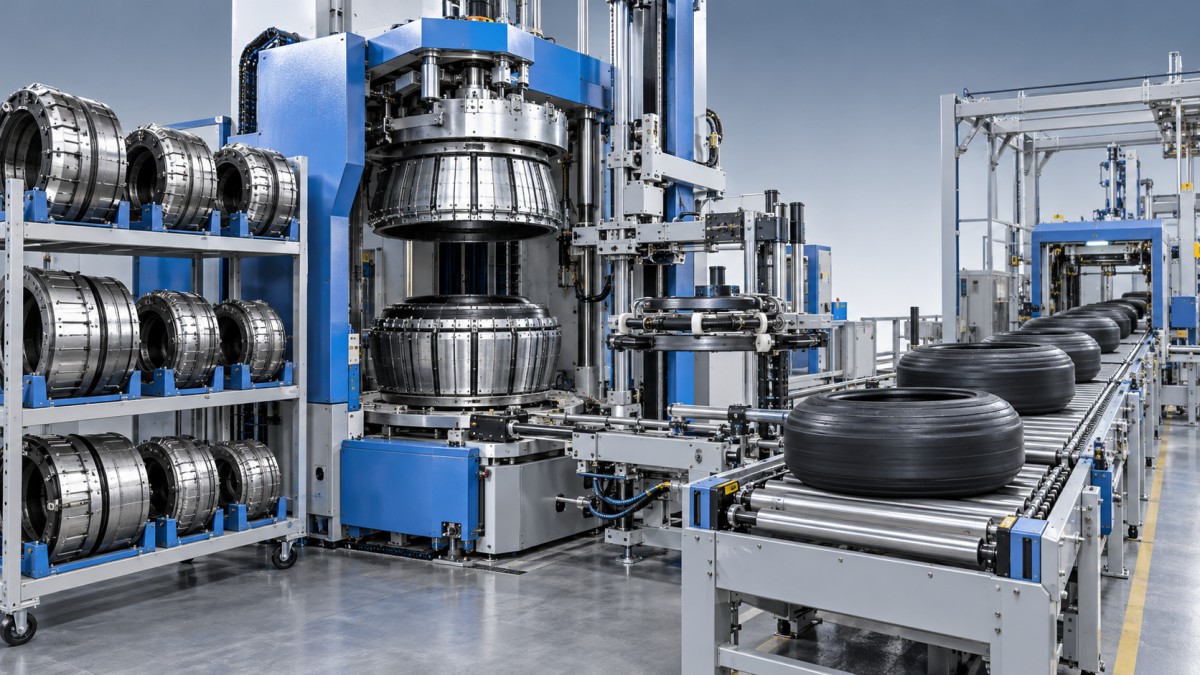
Mechanical repeatability determines how much correction follows a tooling change. Worn locating faces, inconsistent clamping or poorly controlled drum alignment can cause placement errors after nominal settings have been restored. The resulting symptom may look like a recipe problem, although repeated software adjustments will not correct an unstable mechanical reference.
Material setup creates a different loss pattern. Innerliner, body ply, sidewall, belt and tread components require the correct dimensions and presentation for the selected construction. Where supply systems need rethreading or roll changes, the machine remains unavailable until material is ready at the application point. Preparing labelled components beforehand removes avoidable waiting, provided material storage and exposure limits are respected.
After restart, splice quality and component centring deserve particular attention. Incorrect cut length, feed tension or application position can produce overlap variation, wrinkles or displaced components. Simply reducing cycle speed may conceal the symptom while leaving the underlying setup error unresolved.
Recipe recall reduces manual entry, but a recipe is reliable only when it matches the installed tooling and material specification. Revision control should connect the tyre specification, tooling identity and approved settings. Otherwise, a familiar recipe name can load values validated for a different hardware arrangement.
Convert the production schedule into an output estimate
Calculate accepted output by production run, using the cycle time of each size. Dividing an entire shift by the fastest catalogue cycle assumes continuous operation on one specification and hides the effect of short batches.
For each run, a practical planning relationship is:
Accepted green tyres = (allocated run time − stopped setup time − other stopped losses) ÷ stable cycle time − ramp-up loss − rejected builds.
Use consistent time units. Express ramp-up loss as the difference between output at the stable rate and actual builds during the ramp-up window; subtracting the whole ramp-up period as well would double-count part of the loss. Rejected builds should count physically produced tyres that fail acceptance, rather than tyres already represented as lost production time.
Sum the runs to estimate shift output. Include inspection holds explicitly if they stop production or exhaust the available buffer. Where inspection overlaps continued building, record the resulting work in progress and any affected rejects instead of automatically treating the entire inspection duration as downtime.
Batch length changes the result substantially. The same setup consumes a larger share of available time in a short run. Larger batches spread that loss across more tyres, but they also increase inventory and can disrupt downstream sequencing. Grouping sizes by shared tooling often reduces changeover losses while preserving more scheduling flexibility.
Automation must shorten the actual limiting task
Automatic positioning is valuable when repeated manual adjustment dominates setup. It delivers less improvement when the longest task is waiting for a replacement drum, locating the correct components or releasing the first-off tyre. Time observations should separate preparation, mechanical work, controls setup, material setup and quality release so that the limiting activity is visible.
Parallel preparation offers a direct opportunity: stage tooling, verify recipe availability and prepare material while the outgoing size is still running. Activities that require access to hazardous machine areas must remain within the established isolation and safe access procedure. A shorter recorded changeover is meaningful only when the same safety and acceptance requirements apply.
Multi-stage machines also require stage-level measurement. A change completed on the carcass stage does not restore full output if the belt-and-tread stage or transfer sequence remains unavailable. Record where the first waiting queue forms and whether shared handling devices prevent simultaneous setup work.
Confirm that the next process can receive the new size
Building capacity translates into finished-tyre output only when the curing schedule can absorb the new green tyre mix. A downstream mould change or unavailable compatible press creates waiting inventory and can eventually block the building machine.
For example, when coordinating production with a used_second hand Tyre curing press, compatibility requires the specific press’s bead diameter range, mould height, chamber clearance and closing force. The listed range includes two-mould configurations, but specification values must be matched to the individual model. Mould opening and closing time represents only one part of a curing cycle and cannot establish downstream throughput by itself.
A representative acceptance trial should therefore include a transition that retains tooling and another that requires replacement, using the intended materials and normal staffing arrangement. Record the last accepted outgoing tyre, first accepted incoming tyre, stable cycle recovery, rejected builds and downstream waiting separately. Those observations establish a defensible changeover allowance for the intended production schedule.